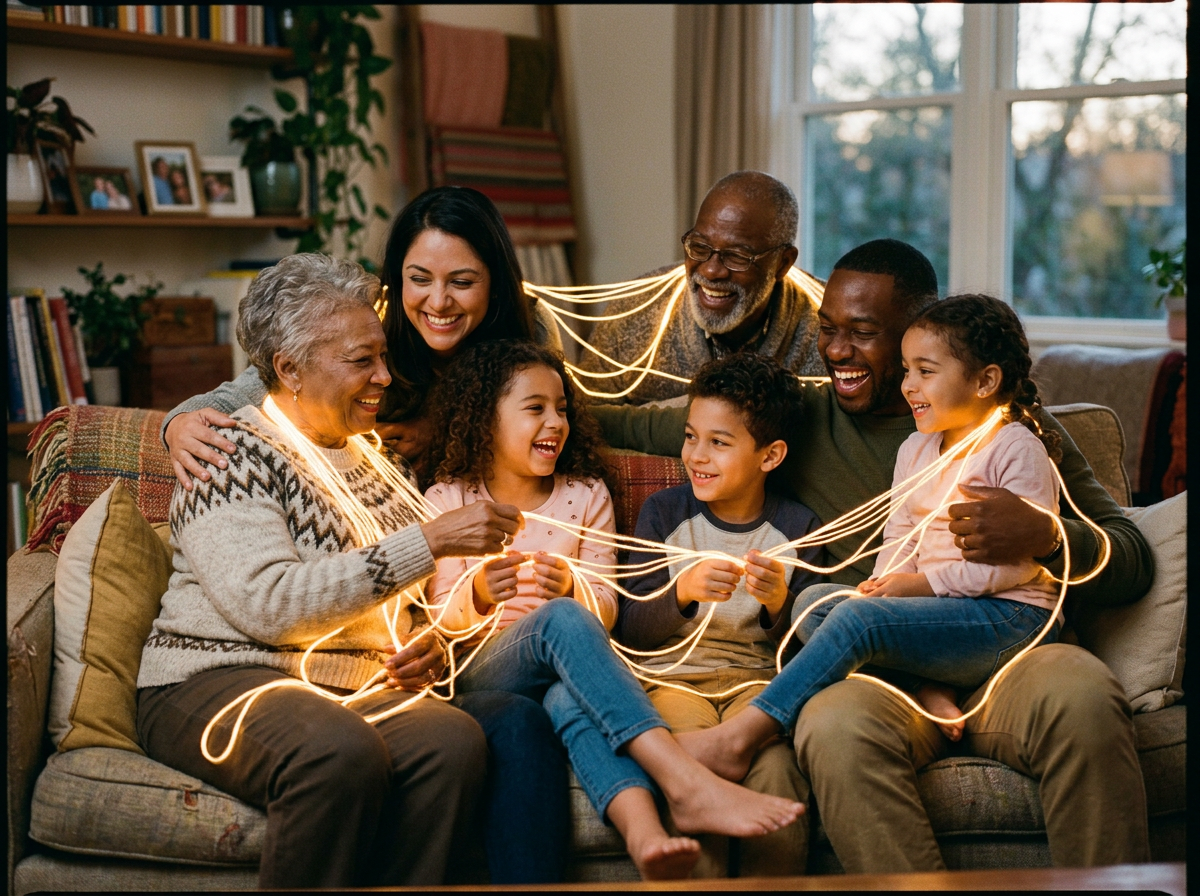
Families pass down more than genetics because children inherit far more than biology. They absorb emotional habits, survival strategies, fears, expectations, silences, and unspoken rules simply by growing up inside a particular family environment. Long before people choose their own identity, they are shaped by the emotional climate they grow up inside.
The Things Families Teach Unintentionally
Every family has its own culture, even if nobody ever says it aloud.
Some families teach people to stay quiet, while others teach them to overachieve or avoid conflict at all costs. In some homes, people learn that love has to be earned through sacrifice, caregiving, perfection, or loyalty. Children absorb these rules early, not because someone formally explains them, but because they pay attention to what gets rewarded, what gets criticized, and what creates tension.
A child who grows up seeing anger punished may become someone who never speaks up. A child raised in financial instability may become obsessed with security, while a child whose emotions were ignored may struggle to recognize their own needs. These patterns can last for decades. Many people reach adulthood believing certain parts of themselves are simply “who they are,” when in reality they are responding to lessons they learned in order to survive, belong, or avoid rejection.
Survival Patterns Often Outlive the Crisis
Families often carry behaviours that once made sense in a different time or under different circumstances. A grandparent who lived through war, poverty, migration, addiction, discrimination, or instability may have learned to distrust people, save everything, avoid risk, or stay emotionally guarded.
Those habits may have helped them survive.
The problem is that survival strategies do not always disappear once the danger is gone. Instead, they get passed down. One generation teaches the next to expect scarcity, avoid standing out, keep difficult feelings private, stay small, or always prepare for the worst. Sometimes people inherit fear without ever inheriting the original reason for it. They grow up carrying anxiety, guilt, pressure, or emotional distance without fully understanding where it came from.
Family Roles Become Identity
Families also pass down roles.
Every family tends to have “the responsible one,” “the difficult one,” “the peacemaker,” “the high achiever,” “the invisible one,” or “the one who always has to be strong.” These roles often begin as ways of keeping the family system balanced, but over time they can become identities people struggle to escape. Someone who spent childhood being “the mature one” may feel guilty resting. Someone labelled “the difficult one” may internalize the idea that they are too much. Someone raised to keep the peace may spend adulthood avoiding conflict even when it harms them. Families rarely assign these roles intentionally, but once people are placed into them, they can spend years trying to either live up to them or break free from them.
Families rarely assign these roles intentionally.
But once people are placed into them, they can spend years trying to either live up to them or break free from them.
Love, Obligation, and Inherited Guilt
Many families also pass down beliefs about what love is supposed to look like.
In some families, love is warmth, support, and freedom. In others, it becomes tangled with guilt, obligation, control, or emotional debt. People may grow up believing that saying no is selfish, rest is laziness, success requires sacrificing yourself, you owe your family your entire future, or that you are responsible for other people’s happiness. These ideas do not come from nowhere. They are often inherited from people who were themselves carrying fear, exhaustion, survival pressure, or unresolved pain.
Understanding where these beliefs come from does not mean blaming previous generations.
It means realizing that not everything inherited has to remain permanent.
Inheritance Is Not Destiny
The most powerful part of understanding family patterns is realizing they can be interrupted.
People cannot choose what they inherit.
But they can choose what they continue.
They can notice the habits, fears, and expectations that no longer fit.
They can question whether guilt is actually responsibility.
They can learn the difference between loyalty and self-erasure.
They can decide that survival is not the same thing as living.
Families pass down more than genetics because people inherit emotional worlds that existed before they arrived.
But inheritance is not fate.
Sometimes the most important thing a person can pass down is not another family pattern.
It is permission to become someone new.
Many of the things people inherit are not obvious at first. They can look like personality traits, coping mechanisms, or simply “the way someone is.”
But often, they are emotional habits that were learned long before they were understood.
Read more: The Emotional Habits We Inherit Without Realizing
Join the Conversation
The stories families pass down are rarely only about the past. They shape identity, relationships, work, and the way people understand themselves long after childhood ends.
If this reflection resonated with you, share it with someone who has ever felt caught between who they were raised to be and who they are becoming.
Take a moment to reflect
What is one belief, habit, or emotional pattern that you inherited from your family —
and are you keeping it, questioning it, or trying to let it go?
