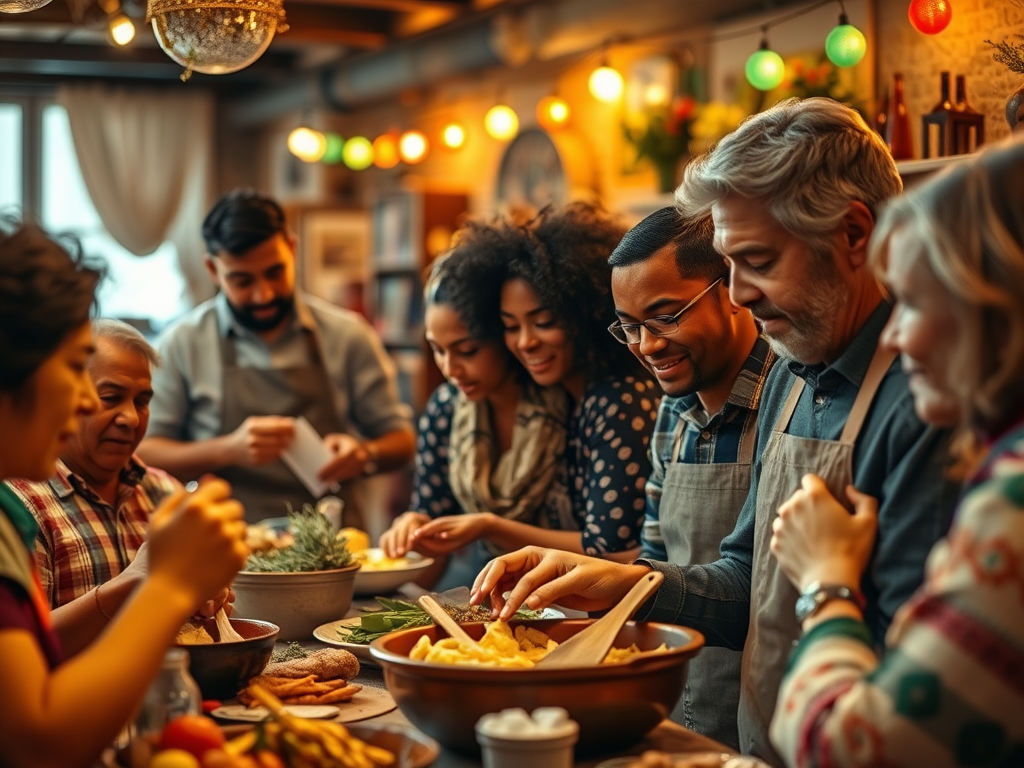
The Evolution of Heritage
For the earliest Italian immigrants, identity wasn’t a lifestyle — it was a lifeline. It meant anchoring themselves to faith, work ethic, and family rituals that provided structure in a world that didn’t always welcome them. Those traditions were survival mechanisms, cultural shields, and emotional compasses all at once.
But as the generations shifted, so did the meaning of “heritage.”
For their children and grandchildren, identity became less about holding the line and more about interpreting it. Today’s Italian-Canadians are navigating a more fluid landscape where culture isn’t inherited blindly — it’s chosen, reshaped, and expressed through personal experiences.
They’ve inherited the pride, the fragments of dialect, the handwritten recipes on stained index cards — but they’ve also gained the freedom to redefine what all of that means. The result? A culture that’s no longer guarded behind closed doors but proudly expressed through art, entrepreneurship, advocacy, and the kind of storytelling that bridges generations.
Heritage is no longer a static heirloom. It’s a living ecosystem.
From Nostalgia to Narrative
For the first generation, Italy lived in memory — the hills they left behind, the struggles that pushed them forward.
For the second generation, Italy became mythology — a place woven from stories, traditions, and expectations, something both familiar and foreign.
And for the third? It has become inspiration — a creative spark rather than a cultural obligation.
This evolution is the natural rhythm of diaspora identity. Longing turns into legacy. Legacy turns into confidence. Confidence turns into creation.
Gone are the days when being “Italian” was measured by your fluency in dialect, your ability to roll gnocchi, or how loudly your family argued at dinner. Today’s Italian-Canadian identity shows up in design studios, TikTok channels, fusion restaurants, personal essays, activism, and digital art.
We’re not caught between two worlds anymore — we’ve built our own middle ground and claimed it fully.
Intersectionality and Inclusion
The Italian-Canadian identity of today doesn’t exist in a vacuum.
This generation is more multicultural, more socially conscious, and more open than any before it. Our families now include interfaith marriages, blended identities, same-sex couples, and culturally diverse households that older generations might have struggled to understand.
Friendships and workplaces are mosaics of backgrounds and perspectives — pushing the boundaries of what an “Italian family” used to look like. And instead of resisting that change, many are embracing it.
This shift doesn’t erase tradition; it expands it.
It transforms heritage from an exclusive club into a welcoming community.
Modern Italian-Canadian identity isn’t watered down — it’s enriched.
Digital Culture and the Global Italian
Once upon a time, being part of the diaspora meant feeling far from the “homeland.” Now? It means having a global audience.
Technology has connected Italian communities across continents. Italian-Canadians are swapping recipes with families in Melbourne, discussing generational trauma with creators from New York, and learning dialects from TikTokers in Calabria.
Food traditions are recorded on Instagram Reels. Family history is archived through voice notes and YouTube documentaries. Dialects once passed only at the dinner table now have Discord servers.
Digital culture didn’t distance younger generations from their roots — it amplified them.
Identity survived modernization by evolving with it.
Honoring the Past Without Being Defined by It
There’s a rare kind of freedom in reaching this generational stage: the ability to respect the past without being controlled by it.
We can cherish the sacrifices of Nonni (Grandparents) and parents who laid the foundation, while giving ourselves permission to build rooms they never imagined. We can hold onto tradition when it feels grounding and release it when it feels restrictive.
This balance — reverence without rigidity — is becoming the hallmark of the modern Italian-Canadian narrative.
We are no longer passive inheritors of culture.
We are active participants shaping its next chapter.
Reflections for the future…
Italian-Canadian identity has never been a frozen artifact. It’s a living conversation — a dialogue between memory and reinvention, between what was and what could be.
Every generation adds something new:
first came survival, then belonging, then understanding, and now — creation.
We are the storytellers, the bridge-builders, the cultural innovators turning history into possibility.
Our roots may be Italian, but our branches grow wherever curiosity, courage, and community take us.
Heritage isn’t just where we come from — it’s what we continue to create.
Before you go, I’d love to hear your voice in this dialogue — how has your own heritage evolved with you? Share your experiences, reflections, or even disagreements in the comments below. Your story might be the missing piece someone else needs to read.
