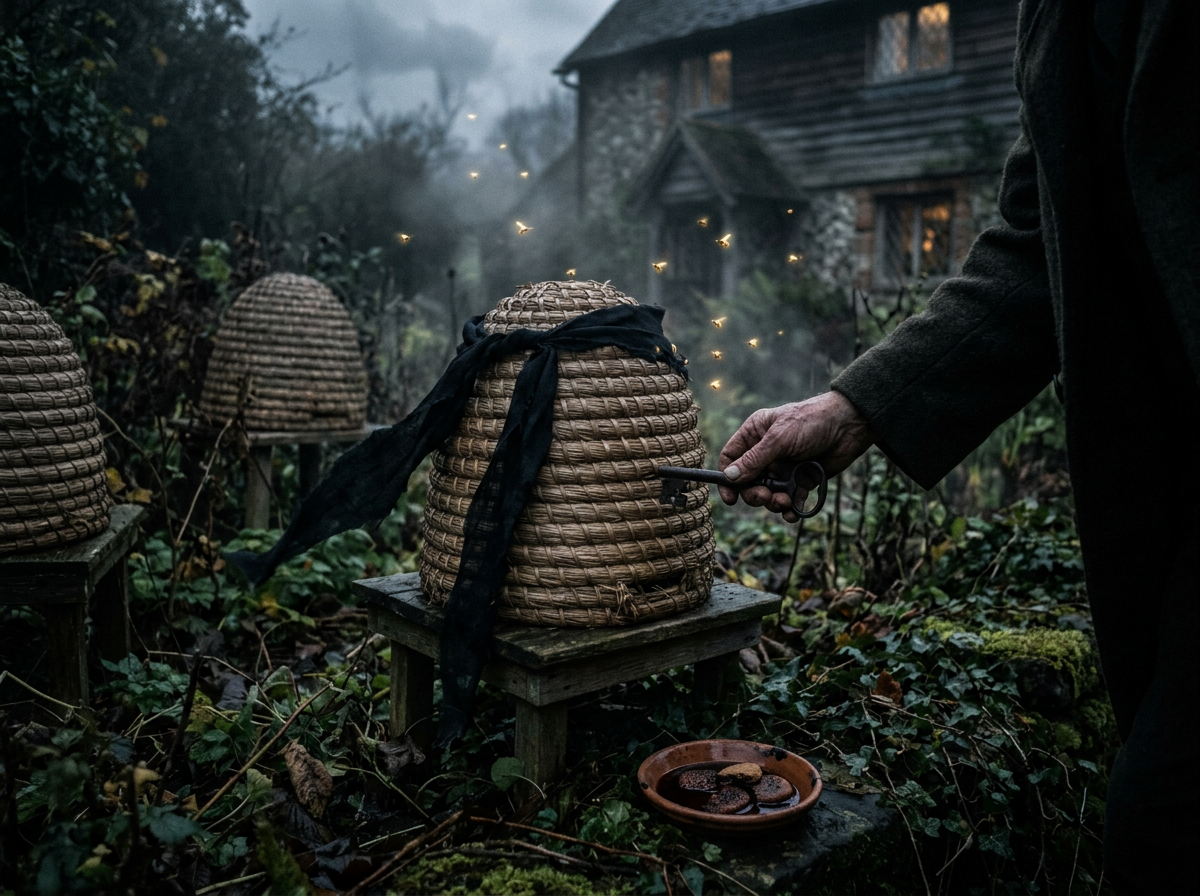
In the quiet rural parishes of Britain, Ireland, and later the Appalachian mountains, the honeybee was never regarded merely as agricultural livestock. To our ancestors, bees were sacred intermediaries—winged, industrious souls capable of flying freely across the boundary between the physical world and the unseen realm of the dead.
The Sacred Contract of the Apiary
Because bees were believed to possess a deep, intuitive sensitivity to the emotional and spiritual state of the family that kept them, they were treated as full members of the household. Under the strict folk custom known as “Telling the Bees,” no major threshold event—whether a birth, a marriage, a long journey, or a death—could pass without formally notifying the hives.
As autumn settled over the farmstead and the cold dark approached, maintaining this bond became a matter of survival. A household that neglected its bees risked losing not only its honey and beeswax for candles, but its spiritual luck for the coming winter.
Putting the Hives in Mourning
The Iron Key Knock
Soon after a family member breathed their last, the head of the household (or a designated servant) walked out to the skeps and tapped gently three times on the wood using the iron front-door key.
The Whispered Rhyme
In a low, solemn voice, the messenger recited a traditional cadence—often a variation of, “Little brownies, little brownies, your master is dead; stay with the house and make honey for the new head.”
Draping in Black Crêpe
Each hive was ceremonially tied with a strip of black mourning cloth (or white lace in the event of a wedding), and a small saucer of funeral biscuit soaked in sweet wine or cider was placed at the hive entrance.
Turning the Hives
In parts of Yorkshire and Devonshire, as the coffin was carried across the threshold of the house, someone had to physically lift and turn the beehives slightly so the insects would not follow the departing soul down the road.
“If you do not tell the bees, the bees will leave the farm—or die in their wax before the frost breaks.”
19th-Century Rural British Proverb
The Cost of Silence
Folklorists recorded dozens of earnest accounts from grieving families who forgot to inform their apiaries in the chaos of a funeral, only to walk outside the next morning and find every single bee dead on the floorboards of the hive, or the skeps entirely abandoned. Whether driven by the cessation of daily care during mourning or an inexplicable sensitivity to human routines, the tradition served a poignant psychological role: it forced the bereaved to walk out into the cold air, speak the unspeakable aloud for the first time, and weave their grief into the living landscape.
Messengers Between Worlds
“Have you ever experienced an animal or pet acting strangely right before—or immediately after—a major life event?”

