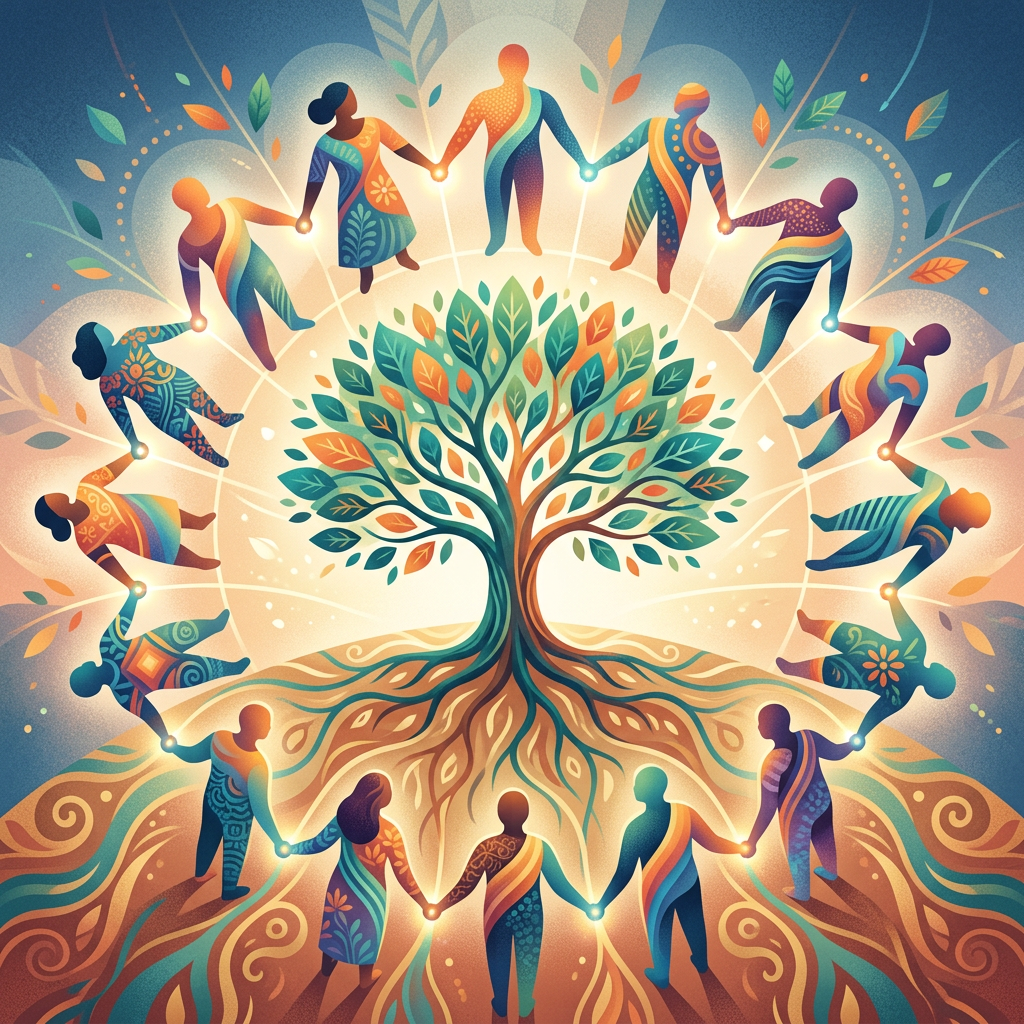
None of us step into the world with an objective lens. We are shaped by invisible boundaries: the familial scripts we absorb at the dinner table, the unspoken cultural blueprints that dictate our duties, and the subtle social privileges or systemic barriers that frame our daily choices. When our interactions remain within familiar echo chambers, our personal experience easily masquerades as the universal standard.
Yet, stepping outside this standard is not simply a matter of personal curiosity. For many communities, historical underinvestment, linguistic marginalization, digital divides, and socioeconomic barriers enforce an involuntary isolation. When survival demands every ounce of daily energy, the bandwidth to access global perspectives or engage outside immediate communal borders is structurally curtailed. The “universal standard” persists not because people refuse to see beyond it, but because systemic inequities build walls that keep distinct lived realities segregated.
Social consciousness begins the moment that baseline is interrupted. It is not an abstract theory, but a deliberate awakening that occurs when our local defaults run directly into the vast reality of global perspectives. Diversity is the catalyst that transforms unexamined assumptions into systemic empathy.
Breaking the Monocultural Bubble
Living within a single cultural script breeds profound blind spots. When a society operates exclusively within its own framework, it mistakes its localized norms for universal human nature.
Taking a global lens quickly unravels this certainty. What Western institutions routinely celebrate as healthy self-reliance can read as relational abandonment in communal societies across West Africa, East Asia, or Latin America. Conversely, what collectivist cultures honor as filial loyalty and social harmony can be misinterpreted by individualist observers as an absence of personal boundaries.
Engaging with diverse lived realities shatters the illusion of a single standard. It forces us to confront the fact that common sense is rarely universal—it is cultural. Whether navigating dual identities as a first-generation immigrant or learning to respect a geopolitical reality completely foreign to our own, these encounters reveal the limits of our worldview. We begin to ask the central question of social awareness: What systems shaped my reality, and what different systems shaped yours?
Pause & Reflect: Mapping Your Invisible Frameworks
Social consciousness begins by turning the lens inward. Before moving forward, examine the invisible architecture shaping your daily assumptions:
- Trace the Origin: Identify two “common sense” rules you follow regarding success, familial obligation, or conflict. Did you author these, or were they handed down through cultural, generational, or survival scripts?
- Map the Counter-Perspective: How might someone from a distinct cultural background, socioeconomic class, or global region view those exact same rules? What systemic conditions make their worldview completely rational?
- Bridge the Gap: In what ways does acknowledging alternative frameworks challenge the systems and assumptions you rely on daily?
From Personal Friction to Cognitive Nuance
Living between worlds or in close dialogue with diverse communities is naturally messy. It demands code-switching, linguistic reframing, and existing within the friction of the “in-between”.
Cognitive psychology and sociolinguistics demonstrate that this friction is a powerful neurological asset. Research on integrative complexity shows that individuals exposed to diverse cultural perspectives, bicultural environments, and multilingual switching develop higher cognitive flexibility. Managing competing cultural schemas prevents confirmation bias, sharpens creative problem-solving, and activates executive control. The friction of the “in-between” builds profound psychological capacity:
- Nuanced Empathy: Exposure to multifaceted perspectives trains the brain to minimize threat responses during ideological disagreements. We learn to listen to contrasting narratives without feeling our sense of self compromised.
- Systemic Insight: Instead of analyzing individual hardships through personal deficit theories, social consciousness connects hardship to structural design. It reveals how economic hurdles, caretaking burdens, and systemic discrimination operate as intergenerational cycles rather than isolated failures.
- Re-Evaluating Inherited Scripts: Witnessing how other societies assign worth, organize labor, and foster community highlights which aspects of our identity are authentic, and which were inherited patterns we can choose to release.
The Shift Toward Collective Responsibility
Encountering diversity does more than expand individual awareness; it redefines how we sustain human life together. It moves equity and justice away from rhetorical buzzwords into mutual commitments.
Look at historical and global models of community resilience:
- The Southern African philosophy of Ubuntu (“I am because we are”): Demonstrates that personhood is inextricably bound to the well-being of the collective, positioning community health as the foundation of individual survival.
- The Andean principle of Ayni (reciprocal care): Embedded across Indigenous cultures in the Andes, this framework treats mutual assistance, environmental stewardship, and community labor not as transactions, but as continuous civic contracts.
- Community-Led Mutual Aid Networks: Visible from grassroots neighborhood cooperatives in North America to rural agrarian circles across Southeast Asia, these structures mobilize resource distribution, child rearing, and elder support precisely where state safety nets fall short.
When we see the structural roadblocks navigating our neighbors’ lives, our definition of progress changes. We step away from transactional survival and performative gestures, choosing instead shared accountability and collective care. We stop searching for isolated validation and begin building coalitions that honor where we come from while actively reshaping where we are going.
Social consciousness is not an innate trait; it is forged through the continuous, humble practice of engaging with differences. In an interconnected world, leaning into diversity remains our most reliable compass for turning individual growth into shared progress.
