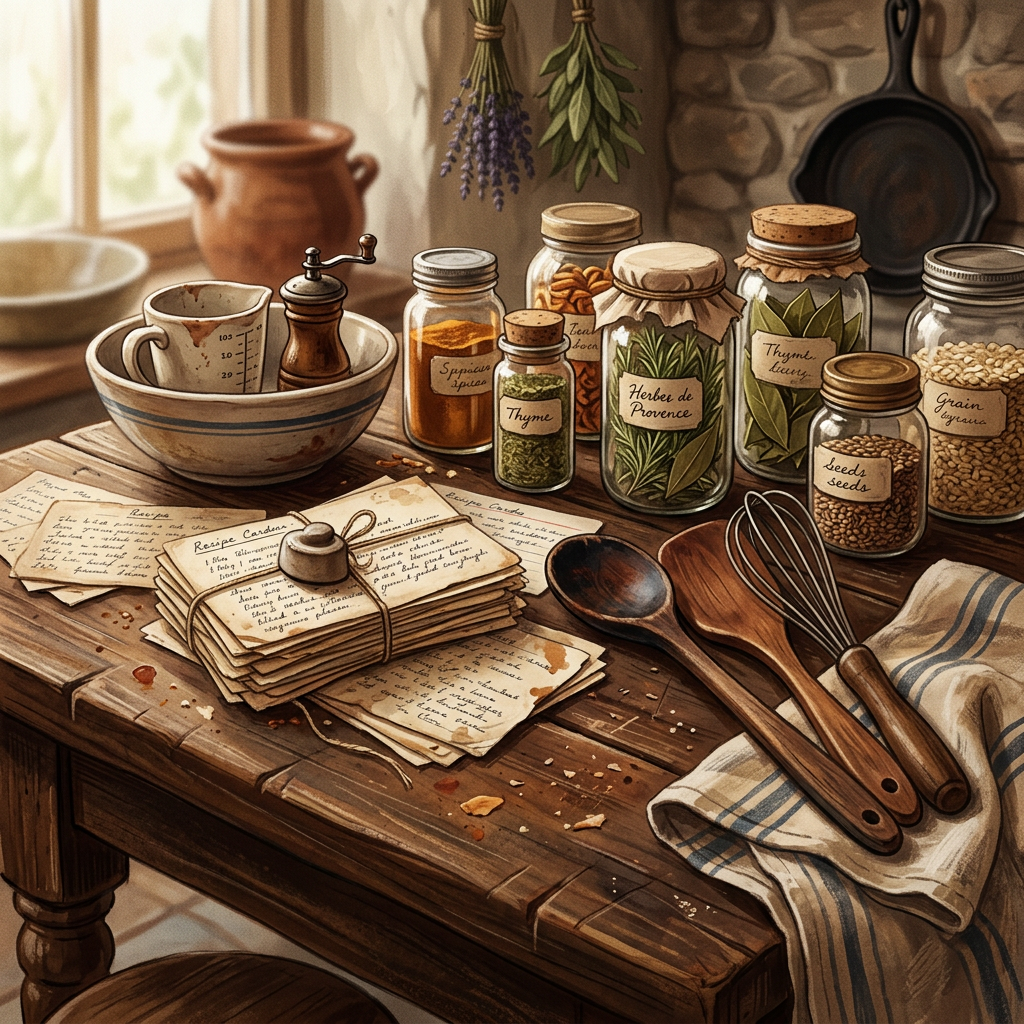
We tend to look for history in grand institutions—in municipal archives, leather-bound registers, immigration manifests, and bronze monuments. We expect our lineage to be stamped, notarized, and cataloged. Yet for generations of immigrant families, the truest, most enduring repository of memory was never committed to paper. It was assembled across flour-dusted countertops, cast-iron pots, and scarred laminate tables.
The kitchen table is not merely domestic furniture; it is an unwritten library. It is where survival strategies were refined, where displaced cultures quietly adapted to unfamiliar soils, and where love was communicated through repetitive, exhausting manual labor. While borders shifted and mother tongues softened, the culinary blueprint remained intact—serving as our most resilient defense against cultural erosion.
“A family recipe is never just dinner; it is an edible map of everywhere our elders had to bend without breaking.”
The Anatomy of the Unmeasured Pinch
Ask a matriarch or patriarch for a family recipe, and you will rarely receive standard metric units. There are no precise grams, level teaspoons, or calibrated oven timers. Instead, instructions arrive as sensory cues: “until the dough yields under your thumb,” “until the oil hums without smoking,” or “add salt until your ancestors tell you to stop.”
This refusal of formal measurement is not carelessness; it is oral pedigree. It requires a cook to inhabit the process rather than execute a script:
- Haptic Memory: The hands remember the hydration of flour long before modern kitchen scales can verify it.
- Acoustic Awareness: Recognizing the exact sizzle that signals the transition from sweating onions to caramelizing them.
- Adaptive Instinct: Modifying a century-old village dish on the fly because the supermarket ingredients in a new country carry different moisture, starch, or acidity.
When you learn a recipe through touch, scent, and sight, you are not following instructions. You are entering an apprenticeship of unspoken ancestral observation.
Ingredients as Migration Manifests
Every traditional dish carries the geography of its makers’ displacement. When immigrants arrived at foreign ports with limited baggage, they brought botanical smuggled seeds, dried yeast starters, and deeply ingrained culinary memories. But once settled, reality demanded compromise.
The domestic archive records these negotiations in subtle, fascinating adjustments:
- Substitution as Resilience: Substituting domestic cheeses, root vegetables, or cuts of meat when authentic heritage items were unavailable or unaffordable.
- The Geometry of Scarcity: Stretching small portions of animal protein with legumes, day-old bread, and polenta—preserving the economic anxieties of the Old World even amidst New World abundance.
- Preservation as Security: The obsessive seasonal ritual of canning jars, curing sausages, and pickling harvests, born not from artisan trendiness, but from historical memories of winter famine and postwar instability.
A dish is never just dinner; it is an edible map of everywhere the family has had to bend without breaking.
The Unspoken Currency of Domestic Labor
In many traditional and immigrant households, emotional vulnerability was rarely spoken aloud. Parents and grandparents who endured upheaval, war, or grueling economic transitions often lacked the vocabulary—or the emotional safety—to say “I am proud of you” or “I want to protect you.”
Instead, love was externalized through arduous domestic devotion. Feeding someone was the absolute emotional currency. A simmering pot of broth or a hand-rolled sheet of pasta represented five hours of standing on tired legs, varicose veins, and blistered knuckles. The invitation to sit down and eat was an unspoken contract: I have absorbed the world’s harshness so that you could sit here in peace.
To reject the food was never about taste; it was interpreted as rejecting their life’s primary engine of care.
Preserving the Library Before the Doors Close
The tragedy of an unwritten domestic archive is its fragility. Handwritten index cards—faded with oil stains, torn at the corners, and scrawled in broken mixtures of dialect and English—are often our only physical relics. When a family elder passes away without standing shoulder-to-shoulder with the next generation at the stove, an entire catalog of sensory nuance disappears forever.
Preserving these rituals in modern life requires conscious intention. It means stepping away from commercial convenience, putting away phones, standing beside our elders in the steam, and learning how to measure with the eye and the heart. Recreating those dishes is not culinary nostalgia; it is an act of historical custody. It ensures that no matter how far we travel from our origins, the table remains anchored, ready to welcome us home.
“Recreating ancestral dishes is not culinary nostalgia; it is an act of historical custody.”
Archive an Unwritten Dish Today
Preserve an elder’s dish using sensory memory rather than cold metric units.

