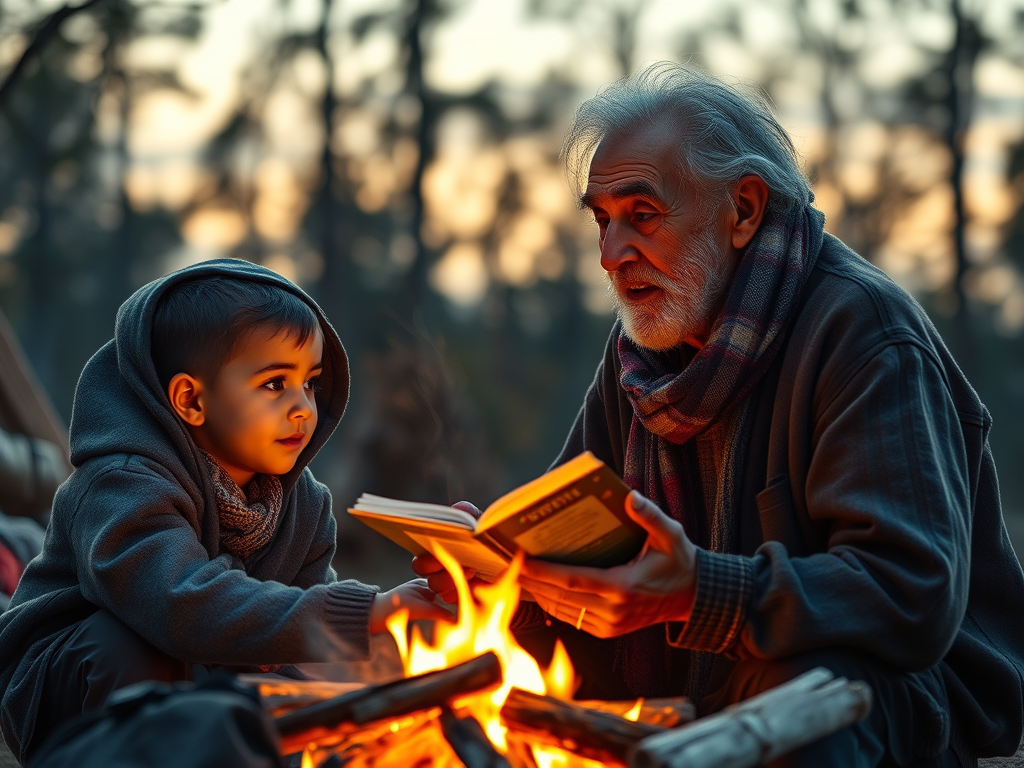
The Oldest Bridge Between Worlds
Long before we had Wi-Fi, cloud storage, or even written language, we had stories. They were the original networks — the first data transfers — carried not by code or signal, but by memory, tone, and trust. Our ancestors didn’t archive information; they embodied it. Every pause, every gesture, every inflection held meaning. Around campfires, in kitchens, and across fields, people didn’t just tell stories — they lived them together. Through spoken word, they taught survival, shared laughter, preserved love, and warned of danger.
Storytelling wasn’t a pastime; it was the backbone of community. It gave people identity, belonging, and direction. It’s what made us a collective species rather than a cluster of individuals.
But somewhere along the way, that sacred rhythm was disrupted. The world began to move faster than our ability to process it. We became fluent in sharing but terrible at listening. Our screens fill with fragments — filtered moments, performative captions, fifteen-second confessions — but rarely the full arc of a story. We scroll, skim, and move on, mistaking exposure for understanding. The result? We’re more connected than ever yet often starved for genuine connection — missing the human layers that give meaning to it all.
What We Lose When We Stop Listening
When elders tell stories, they’re not just reminiscing — they’re preserving knowledge. Each story carries emotional intelligence embedded between the words: how to endure loss, how to rebuild after failure, how to find laughter even when the cupboards were bare. These aren’t just tales of the past; they’re psychological blueprints. They teach us how to bend without breaking, how to recognize what truly matters, and how to keep dignity alive when circumstances try to strip it away.
But when younger generations stop listening, that wisdom fades into static. The lessons don’t disappear — they simply stop transferring. Like books left unread, their pages still hold truth, but no one’s turning them anymore. What once flowed naturally between generations now sits bottled up in silence, waiting for someone curious enough to ask, “What was it like?”
And the loss goes both ways. Younger people bring fresh eyes, new language, and an emotional vocabulary that older generations didn’t always have space for. They can reinterpret old stories through the lens of mental health, diversity, or identity — offering insight that gives ancient wisdom new life. When that bridge is open, storytelling becomes more than a monologue; it becomes a living conversation, evolving with every generation that adds its voice. It keeps both wisdom and curiosity alive — reminding us that understanding isn’t inherited automatically; it’s earned through dialogue.
Every Story Is a Survival Manual
The story your grandfather talked about working three jobs to keep food on the table? That’s not just “old-school hustle”. It’s a living example of resilience — a reminder that survival often starts with sacrifice. Those stories teach us about grit, endurance, and the quiet pride that comes from providing even when the odds are stacked. They remind us that dignity isn’t about comfort; it’s about persistence.
Your mother’s tale of navigating a workplace that didn’t value her voice isn’t just a memory — it’s a masterclass in composure, strategy, and self-advocacy. Beneath her calm retelling are the unspoken lessons: how to assert yourself without apology, how to read a room, how to fight for respect without losing your integrity.
And then there’s your own story — the one about burnout, career pivots, or starting over when the world made you question everything you thought you knew. To you, it might feel ordinary or messy, but to someone else, it’s a roadmap. A quiet reassurance that it’s possible to fall apart, regroup, and still move forward.
Each generation’s stories layer on top of one another like chapters in the same human manual. They don’t just describe life — they equip others to manage it. Every hardship shared becomes a guide for resilience, every moment of vulnerability a signal that survival doesn’t always look heroic. Sometimes, it looks like getting up one more time than you fall.
Listening as an Act of Connection
We often think storytelling is about expression — about who can tell the most captivating tale, whose words linger the longest. But the real power of storytelling lies in reception. Listening — truly listening — is one of the purest forms of respect. It’s a quiet acknowledgment that says, “Your experience matters. Your voice has a place here”. In a world obsessed with speaking, listening becomes a revolutionary act of empathy.
When we give someone our full attention, we’re doing more than hearing their words; we’re holding space for their humanity. We’re saying, I see you. I may not have lived what you’ve lived, but I’m willing to understand. That simple act of openness can mend rifts that decades of misunderstanding created.
It’s in that space — between the storyteller and the listener — that generations find common ground. We may differ in slang, politics, or worldviews, but stories strip us back to the essentials: love, belonging, survival, purpose. Those are the constants in the human experience, no matter the decade or device.
Listening also teaches empathy across time. It allows us to reinterpret what we thought we knew. What one generation calls “stubbornness”, another calls “resilience”. What one calls “rebellion”, another calls “freedom”. Through stories, we begin to understand the emotional context behind behavior — why people became who they are, and how they carried their beliefs through changing worlds.
When we listen, we’re not just hearing stories — we’re inheriting them. And in doing so, we keep the emotional lineage of humanity alive.
Passing the Torch Forward
Today’s storytellers have more tools than any generation before us. We record podcasts from our bedrooms, publish essays from coffee shops, and film life updates from the palms of our hands. Technology has democratized storytelling — anyone with a voice, a phone, or a thought can share it with the world. But with that freedom comes a deeper responsibility: to tell stories that mean something. To make sure that in the rush to be seen, we don’t forget to connect.
Because every post, every recording, every thread of words we leave behind becomes part of the collective archive of our time. It’s the modern equivalent of those fireside stories — just carried through a different kind of flame. What we choose to share today becomes tomorrow’s digital folklore, the reference point for someone trying to understand what it felt like to live, struggle, and hope in this era.
The challenge isn’t in the telling — it’s in the depth of how we tell it. Authenticity cuts through noise. Vulnerability bridges distance. When we speak from truth — about failure, confusion, identity, or growth — we’re doing what generations before us did in their own way: helping others make sense of their humanity.
And that’s the real torch we pass forward.
Not fame. Not perfection.
But perspective.
So, the next time someone older starts a sentence with “Back in my day…” or a younger voice says, “You just don’t get it”, pause before dismissing it. That’s history — and possibility — unfolding in real time. Storytelling has never been about who speaks the loudest. It’s about who listens long enough to carry the flame forward.
Join the Conversation
Every generation holds a piece of the story — a lesson, a laugh, a scar, or a truth worth passing on. Now it’s your turn. What stories shaped you? What wisdom have you carried, challenged, or rewritten along the way?
Share your stories, your perspectives, and your reflections in the comments below. Let’s keep the dialogue alive — one story, one connection at a time.
