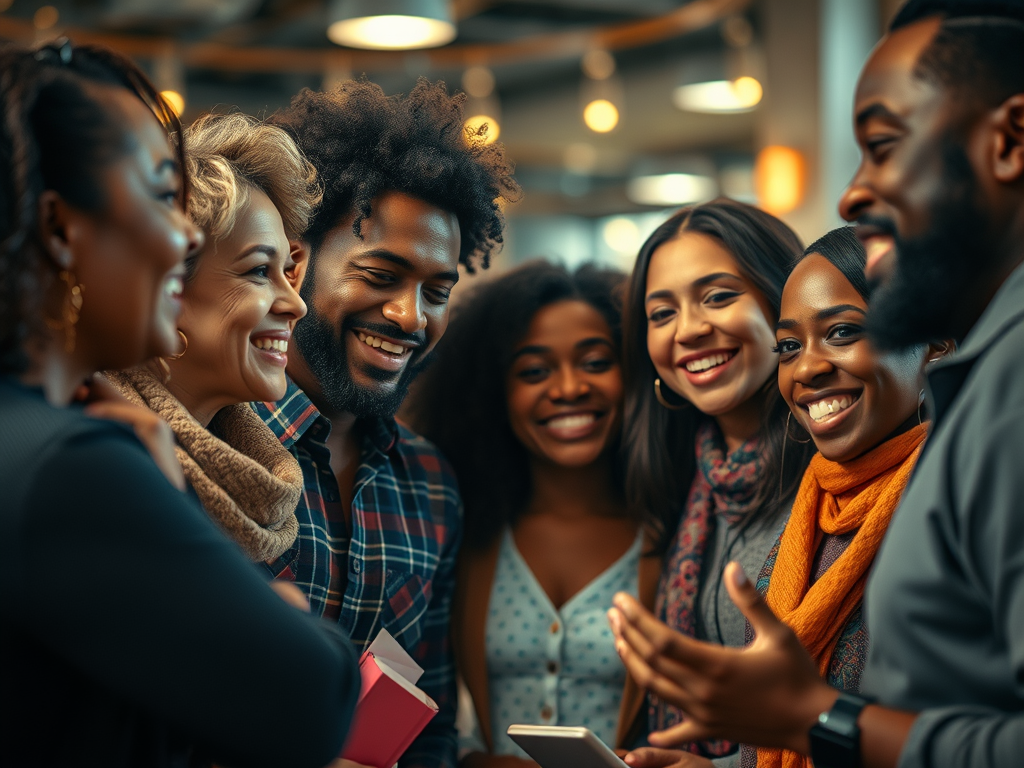
Living in a diverse community is more than just sharing space with people from different backgrounds — it’s a daily opportunity to experience the full spectrum of human life. Exposure to varied cultures, perspectives, and experiences encourages people to step outside their comfort zones, challenge old assumptions, and discover new ways of seeing the world.
This interaction doesn’t just broaden horizons — it enriches daily life. It fosters empathy, open-mindedness, and adaptability. On a social level, it creates stronger, more connected communities where understanding replaces division. Psychologically, it nurtures resilience, personal growth, and a deeper sense of belonging. Ultimately, diversity reminds us that our differences don’t divide us — they expand the ways we learn, connect, and thrive together.
Cognitive Growth & Openness
Living in a diverse community pushes people to think beyond what they already know. Exposure to different languages, traditions, and belief systems naturally expands one’s worldview. Instead of relying on assumptions, individuals begin to see that there are countless valid ways to interpret and experience life.
This kind of intellectual flexibility is essential in today’s fast-changing world. It teaches people to stay adaptable, curious, and open to new possibilities.
Diversity also fuels creativity. Seeing how others approach challenges — in problem-solving, art, or everyday life — introduces new perspectives that spark innovation. Even a simple conversation across cultures can ignite an idea that might never have emerged in a more uniform environment.
Most importantly, personal interaction reduces prejudice. When stereotypes are replaced with real stories and relationships, bias loses its power. People begin to empathize with others’ experiences, realizing that behind every difference lies a shared human desire for dignity, respect, and connection. Over time, this exposure builds tolerance, compassion, and a more inclusive mindset.
Emotional Well-Being: The Hidden Power of Diversity
We often think of diversity in terms of representation — different faces, languages, and traditions. But beneath that surface lies something deeper. Living in a diverse community doesn’t just broaden your mind — it strengthens your heart. It quietly nurtures emotional well-being in ways that shape how we see ourselves and how we connect with others.
A True Sense of Belonging
There’s a special kind of peace that comes from feeling like you belong — not because you’ve blended in, but because you’ve been accepted as you are. Inclusive communities allow people to see reflections of themselves in others: their stories, accents, struggles, and joys. That recognition says, “You’re part of this, too.” It’s not about conformity — it’s about being valued for your uniqueness. That sense of visibility and validation builds emotional security and authentic self-expression.
One powerful example of this principle in action comes from Sesame Workshop, the nonprofit behind Sesame Street. Their entire philosophy centers on fostering belonging — both in their workplace and for children around the world. Through initiatives like Identity Matters, they explore how kids form ideas about race, gender, and social identity. Their “mirror and window” approach — helping children see both themselves (the mirror) and others (the window) — teaches empathy and builds self-worth. It’s a model of how media, education, and community spaces can work together to nurture inclusion from the earliest age.
Resilience Through Connection
When life gets hard, the people around us determine how well we recover. A diverse network of friends and neighbors provides not just comfort but perspective. One person may respond to adversity with quiet endurance, another with humor, another with creativity. Each worldview becomes a tool we can borrow when our own fails us. This variety in support builds emotional flexibility — the kind that helps us face challenges with perspective and grace.
Celebrating Cultural Pride
One of the most healing aspects of diversity is the freedom to stand tall in your identity. In spaces where cultures are celebrated, not just accepted, people can express their roots openly — through food, music, language, and tradition. This isn’t just cultural exchange; it’s emotional affirmation. Pride in one’s heritage strengthens self-esteem, confidence, and belonging, creating a ripple effect that uplifts the entire community.
In Toronto’s multicultural neighborhoods, it’s not uncommon to see streets come alive during cultural festivals — from Caribbean Carnival to Lunar New Year parades to Indigenous heritage celebrations. These moments aren’t just performances or displays of tradition; they’re acts of affirmation. When a child sees their culture represented in public — their food, music, or language celebrated rather than hidden — it reinforces that their identity has value. For others in the crowd, it’s an invitation to learn, connect, and celebrate together. These shared experiences weave belonging into the public fabric of a city, turning diversity from a demographic fact into a living, joyful force.
Social Benefits
Diverse environments sharpen how we connect. Navigating cultural nuances and communication styles demands patience, empathy, and active listening — the kind of communication that builds true understanding. Over time, people become more skilled at reading cues, adapting their tone, and finding common ground.
Take, for instance, a workplace team made up of colleagues from different cultural and linguistic backgrounds. During meetings, they might initially struggle with differing communication styles — some speaking directly, others preferring subtlety or deference. But as they collaborate over time, they develop shared rhythms: pausing to ensure understanding, learning when to speak up, and when to listen. These adjustments don’t just improve workflow; they build mutual respect. What began as potential friction evolves into trust and a culture of empathy.
Differences in opinion are inevitable, but in diverse settings, they become opportunities for learning. People learn to compromise, see multiple perspectives, and resolve tension without hostility. This strengthens emotional intelligence and reinforces that disagreement doesn’t have to equal disrespect.
Multicultural communities are webs of opportunity. Each connection — personal or professional — opens doors to new collaborations and friendships. Beyond career advantages, these relationships enrich life, offering inspiration, perspective, and human connection that can’t exist in isolation. Whether it’s a neighbor introducing you to a new tradition, a coworker sharing a different approach to leadership, or a festival that brings strangers together, diversity continually expands our capacity to connect and grow.
Psychological Growth
Diverse environments stretch comfort zones and challenge assumptions. In doing so, people develop a higher tolerance for uncertainty — the ability to stay calm and curious when things don’t fit neatly into a single worldview. This trait builds resilience and confidence, essential for navigating modern life.
Hearing firsthand stories of migration, discrimination, or adaptation transforms empathy from a concept into a lived experience. Understanding others’ struggles and triumphs dissolves judgment and nurtures compassion — the foundation of emotional maturity.
Exposure to different cultures acts like a mirror, reflecting one’s own beliefs and prompting reflection. People begin to question what they’ve inherited versus what they truly believe. This self-examination leads to a stronger, more authentic sense of identity. In understanding others, we often discover who we really are.
Societal Impact
Exposure to diverse communities often inspires greater participation in civic life. People become more motivated to volunteer, advocate, and show up for causes that matter. Diversity fosters the understanding that community strength is built through shared responsibility.
Contrary to the myth that diversity divides, when embraced with respect, it unites. Shared experiences and understanding form the glue of collaboration. Diverse communities that prioritize inclusion tend to show higher trust, creativity, and resilience — the traits of a thriving society.
Children raised in multicultural environments grow up seeing difference as normal — and valuable. They develop adaptability, empathy, and inclusivity early on, shaping them into compassionate global citizens ready to lead with understanding and respect.
Why Diversity Matters
Exposure to diversity is more than a social virtue — it’s a catalyst for human evolution. It expands the mind, deepens empathy, and strengthens the social fabric. People become better communicators, more understanding citizens, and more grounded individuals.
In the end, diversity doesn’t just make communities richer — it makes humanity wiser.
Author’s Note
In a world that can feel increasingly divided, celebrating diversity isn’t just the moral thing to do — it’s the smart thing to do. It’s how we grow, adapt, and build societies that reflect the best of us.
If this message resonates with you, share your own story below.
How has diversity shaped your perspective, your relationships, or your sense of belonging?
Let’s start the kind of conversation that brings people closer — one story at a time.
