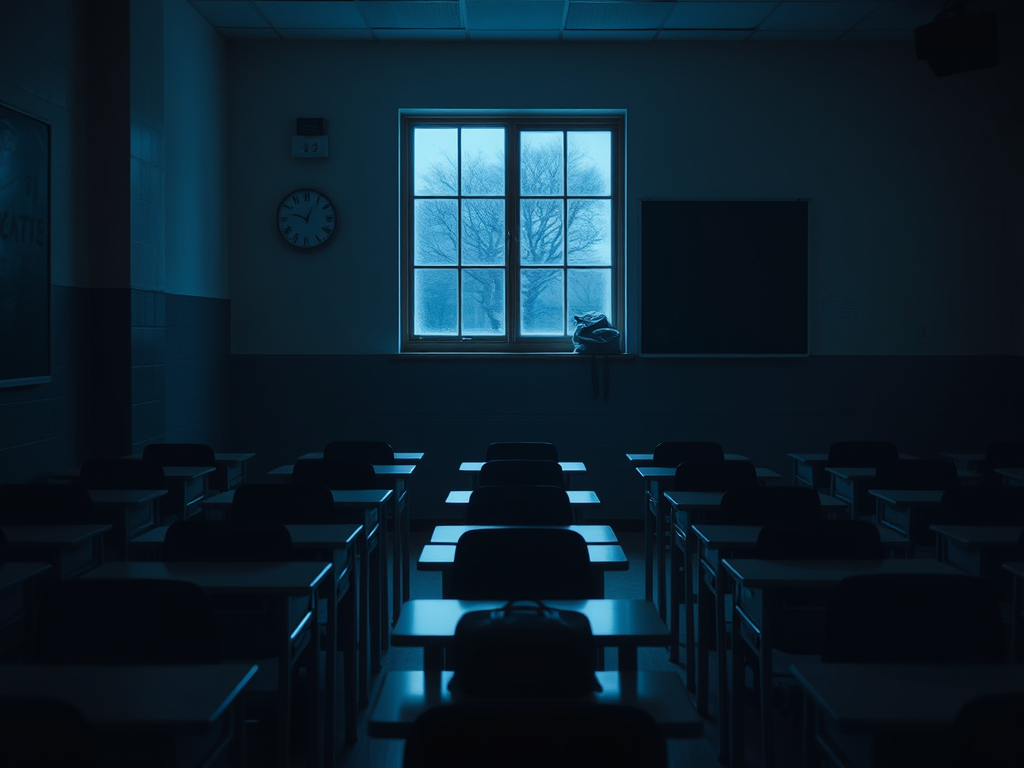
The truth, stark and perhaps unsettling, is that I am utterly spent by the relentless, monotonous drumbeat of school shooting headlines, a global litany of sorrow that transcends borders. With every new tragedy, the same crushing wave breaks: the familiar torrent of grief, a searing anger, and a desolate helplessness. Yet, beneath that surface surge, a profound quietness has taken root within me. This silence is not indifference; rather, it is the soul’s surrender when compassion repeatedly meets inertia—a desperate, futile feeling of shouting one’s heart out against a deafening, unforgiving wind.
I still carry the ghost of a student’s fear—the cold, sharp memory of sitting at a desk and quietly questioning whether I would survive the school day. That kind of terror doesn’t fade; it retreats to the shadowy corners of memory, a persistent, chilling whisper activated by every breaking news alert. So, when my sympathy dries up for the systems that perpetually choose stasis over salvage, it is not a lack of humanity, but the bitter, caustic residue of heartbreak refined into an absolute exhaustion. To watch inaction repeat itself is to see it harden into something far worse: a tacit, horrifying acceptance.
A Question of Choice
This is where the weariness transforms into a desperate, focused clarity. When examining these global patterns of response, the starkest differences are not rooted in possibility but in sheer political will. The United States possesses the abundant means, the exhaustive knowledge, and the chilling data necessary for comprehensive action, yet consistently, that momentum is deliberately fractured and stalled in the relentless grind of politics and bitter polarization.
Canada, my home, chooses a different, perhaps more temperate, path—a slow, determined climb. While we grapple with our own undeniable gaps, every tragedy seems to spur a measured, collective movement; it may not achieve the instant velocity the heart demands, but it is undeniably a current flowing forward. And then stands New Zealand, a singular beacon. Faced with one profound, horrific scar on its national conscience following the Christchurch mosque tragedy, its leaders responded with a rare alchemy of unity, breakneck speed, and moral clarity. In the space of mere weeks, they decisively overhauled the laws, launched a massive buyback of the newly proscribed weapons, and issued an unmistakable declaration that public safety was not a negotiable compromise. This outcome is not perfection—no nation achieves that pristine state—but it is a living, breathing testament to what is undeniably possible when the iron of courage finally overpowers the comfortable inertia of complacency.
Understanding the core Divide
This chasm between countries forces a deeper inquiry: how did a centuries-old legal text—the U.S. Second Amendment—come to hold such sacrosanct, paralyzing power over contemporary life? When penned, it was a practical matter of collective defense in a fledgling nation without military or established police. Today, that same principle is invoked in a country boasting the world’s largest defense apparatus and most heavily armed domestic security. Somewhere along this turbulent evolution, the foundational principle of public safety became inextricably tangled with personal identity and a weaponized sense of fear.
In contrast, within Canada, firearms are largely relegated to the role of tools—for sport, for sustenance, or for necessity in remote territories—but they do not attempt to define the national self. Our measured policies reflect this careful balance, even in their imperfections. Most poignantly, in New Zealand, the national dialogue immediately after Christchurch was utterly devoid of ideology; it was rooted first in unadulterated mourning, and then in a unified, fierce commitment to doing better. This leads me to a chilling conclusion: what ultimately separates countries on this issue is not their shared history with weaponry, but their fundamentally different relationship to grief. Some nations possess the ethical clarity to treat tragedy as a compulsory turning point; others, exhausted or unwilling, resign themselves to treat it as nothing more than inescapable background noise.
Where True Courage Fits In
I reject the insidious notion that violence is inevitable. Instead, I see it as the catastrophic sum of choices—choices either meticulously made, consciously avoided, or tragically delayed. True, deep-rooted prevention does not begin and end with legislation; it starts with the foundational elements of empathy, societal foresight, and the fierce willingness to confront the most uncomfortable truths.
Of course, we desperately require policies that possess both teeth and reach—strengthened background checks, sensible waiting periods, rigorous enforcement against illegal trafficking, and comprehensive mental health support. Yet, even more vital than these mechanics is the infusion of political and moral courage. We must abandon the narrative that treats these entirely preventable deaths as if they were unsolvable, cosmic mysteries.
The agonizing irony is that the blueprint for success already exists. It has been written in the resolute actions of countries that refused to falter. The ultimate, defining question, therefore, is not if change is possible, but whether nations are finally willing to stare down the ultimate, horrific cost of doing absolutely nothing.
Looking Forward: The Final Question
I have stopped asking why this tragedy keeps repeating. The reasons are a tragic record—documented, rehearsed, and recited verbatim after every act of violence. What I ask now, instead, is when—when will the scale finally tip? When will the immense weight of human loss finally outweigh the brittle foundation of political stubbornness and partisan lines in the sand? When will we collectively decide that a child’s fundamental right to safety is unequivocally more sacred than any ideological boundary?
Every time a siren wails, we cycle through the pattern: mourn, debate, and then passively hold our breath for the next inevitable bullet. But grief without action is not catharsis; it is a corrosive wound that will never heal. So, the core challenge before us all—regardless of the borders that define our citizenship—is to transform our raw grief into unyielding resolve. We must remember that safety is not a privilege to be debated; it is the most sacred promise a society makes to its children.
Until that promise is truly and fully kept, the headlines will continue their mournful repetition, and far too many classrooms will tragically fall silent before their time.
