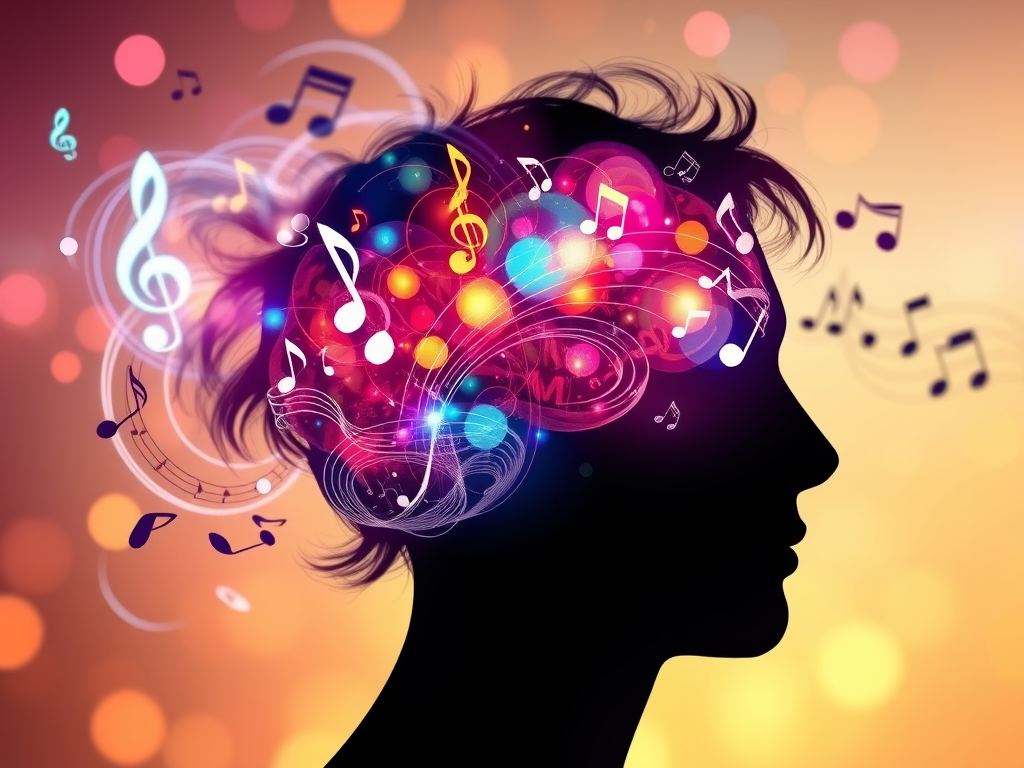
Music has always had a profound impact on human emotions. From soothing melodies to energetic beats, it can evoke a wide spectrum of feelings and significantly influence our well-being. But how exactly does music affect the brain? How does it interact with the nervous system? And more importantly, how can it support our overall health?
To fully appreciate music’s power, it’s essential not only to explore its neurological and physiological effects but also to recognize its enduring cultural role. Across the globe, music has long served as a core element of communal identity, healing rituals, and emotional expression—making its benefits not only biological but also deeply social and cultural.
The Brain’s Response to Music
The relationship between music and the brain is both complex and fascinating. When we listen to music, our brains process sound and rhythm, triggering a cascade of physiological and emotional responses. A key region involved is the auditory cortex, found in the temporal lobe, which helps us interpret pitch, melody, and rhythm.
However, music engages far more than a single area of the brain. It activates multiple regions simultaneously, including those responsible for memory, emotion, and movement—essentially turning our minds into a fully lit switchboard. This is why certain songs don’t just sound good; they feel personal.
For me, the song Drops of Jupiter by Train creates an almost immediate sense of serenity. It transports me back to a time when life felt simpler, when creativity wasn’t something I had to schedule or justify—it simply ran my life. That freedom of expression grounded me on so many levels, and hearing the song now reawakens that same emotional imprint.
This experience isn’t unique. Research published in Nature Neuroscience shows that pleasurable music stimulates the release of dopamine, a neurotransmitter associated with reward and motivation (Salimpoor et al., 2011). This neurological response explains why music can instantly elevate our mood—or carry us back to specific moments, identities, and versions of ourselves we thought we’d outgrown.
Music, the Nervous System, and Stress Relief
Beyond its emotional resonance, music has a measurable impact on the autonomic nervous system. Listening to calming music has been shown to lower heart rate, reduce blood pressure, and decrease cortisol levels—all of which contribute to stress reduction and relaxation.
I’ve personally witnessed this effect in real time—usually when I’m one email away from dramatically quitting society, only to put on a soft playlist and suddenly decide, actually, I can answer just one more message. It’s not a miracle cure, but it’s close.
Research backs this up. A study published in the Journal of Music Therapy found that participants who listened to slow-tempo music showed decreased physiological signs of stress, including a slower heart rate and reduced cortisol levels (Thoma et al., 2013). This is especially relevant today, given the strong link between chronic stress and major health conditions such as heart disease and depression.
Cultural Perspectives: Music as Medicine Around the World
The idea that music can heal isn’t new. Long before research studies and clinical terminology, cultures around the world understood music as something far more meaningful than sound. It was—and still is—a way to care for the spirit, regulate emotions, and stay connected to one another. Across continents and generations, music has quietly served as a form of medicine.

In many Indigenous North American cultures, drumming and chanting have long been used in rituals meant to restore balance—emotionally, spiritually, and communally. Music was never separate from daily life; it was a sacred thread tying the physical and spiritual worlds together. And yet, for much of history, Indigenous peoples were forcibly prevented from practicing these traditions. Music and dance were restricted, silenced, or punished under colonial systems that sought to erase culture itself. That these practices continue today speaks not only to their healing power, but to an extraordinary resilience—music as survival, not just expression.
In Indian culture, classical ragas are believed to shape emotion in intentional ways. Certain ragas are associated with specific times of day, seasons, or inner states, reflecting a deep awareness of how sound interacts with the body and mind. Within Ayurvedic tradition, music is sometimes used to help restore harmony. A raga like Darbari Kanada, for example, is known for its grounding, introspective quality, while Bhairavi often carries a sense of emotional release and closure—music meeting the listener where they are, rather than demanding anything from them.

Across Sub-Saharan Africa, music is woven into the rhythm of everyday life. It accompanies moments of joy, grief, transition, and remembrance. In many communities, drumming and call-and-response singing are shared during funerals and rites of passage—not to suppress emotion, but to move through it together. Healing happens collectively, in sound, in movement, in presence.
Though these traditions differ in form, they share a quiet understanding: music is not an accessory to life—it is part of how we endure it. Long before science confirmed music’s effects on stress, emotion, and connection, people already knew. They listened. They remembered. And they passed that knowing on.
Cognitive and Memory Benefits of Music
Beyond its emotional and physiological effects, music also plays a powerful role in cognitive functioning and memory. Engaging with music—particularly through musical training such as learning to play an instrument—helps strengthen the connections between different regions of the brain. This increased neural connectivity supports both short-term processing and long-term cognitive resilience, enhancing the brain’s ability to adapt and learn over time.

Research consistently supports these benefits. A review published in Frontiers in Psychology found that musical training is associated with improvements in working memory, language processing, attention control, and spatial-temporal reasoning (Rodrigues et al., 2014). In practical terms, this means music doesn’t just make us feel good—it helps sharpen how we think, focus, and retain information.
Perhaps most striking is music’s impact later in life. In older adults and individuals living with Alzheimer’s disease or other forms of dementia, familiar music has been shown to support memory recall, emotional recognition, and communication. Songs tied to personal history or cultural identity often remain accessible even when other memories fade, offering moments of clarity, connection, and recognition. In these instances, music becomes more than stimulation—it becomes a bridge back to the self.
Music Therapy: A Clinical and Cultural Approach
Music therapy—the intentional use of music to support physical, emotional, and cognitive well-being—offers a clear example of how science and culture intersect in healing practices. In Western medical settings, music therapy is commonly used to help reduce pain, anxiety, and stress in surgical and hospital patients, often lowering the need for sedation and improving overall recovery experiences. At the same time, in cultures with strong oral and musical traditions, music therapy often incorporates familiar rhythms, songs, and storytelling elements, allowing individuals to reconnect with their identity, heritage, and sense of belonging as part of the healing process. This cultural grounding can be especially powerful, as it frames healing not as something done to a person, but something experienced with them.

For individuals living with Parkinson’s disease, music therapy has shown particular promise: rhythmic cues—especially those drawn from culturally familiar music—can help regulate movement, improve gait, and support motor coordination by providing an external timing structure the brain can synchronize with. Programs such as neurologic music therapy and rhythm-based gait training have been increasingly used in rehabilitation settings, reinforcing music’s practical role in neurological care. Reading about these approaches, it’s hard not to notice how often healing begins with something deeply familiar, proof that what comforts us emotionally can also steady us physically.
Together, these approaches highlight music’s dual role as both a clinical tool and a cultural practice. Music supports more than brain chemistry alone—it fosters connection, reinforces memory, and restores meaning, making it a uniquely powerful component of holistic healing.
All in all…
Recognizing music as both a clinical tool and a cultural practice invites us to look at it differently—not as something we turn to occasionally, but as something that quietly supports us through change, stress, and healing. In that sense, music becomes less about performance and more about presence.
Music is far more than entertainment. It is a multifaceted force that stimulates the brain, calms the nervous system, and connects us to cultural heritage and collective memory. Scientific research confirms what many people have felt intuitively for years: music can enhance emotional well-being, sharpen cognitive function, and help regulate stress. At the same time, cultural traditions remind us that music has always been a tool for healing, connection, and expression—long before it was studied, measured, or prescribed.
Personally, music has been both an anchor during difficult seasons and a quiet companion in moments of joy. Whether it’s a song that lifts my mood or a familiar melody that brings me back to a sense of home, music consistently reconnects me—to myself, and often to others, too.
And maybe that’s the point.
Whether you’re listening to a symphony, humming along to an old favorite, joining a choir, or revisiting music tied to your heritage, sound has a way of meeting us where we are. It holds memory. It regulates emotion. It reminds us we’re not alone in what we feel.
So I’ll leave you with this:
What song has stayed with you—longer than you expected?
The one that shows up when you’re tired, reflective, or quietly trying to hold yourself together?If you feel like sharing, the comment section is open. Conversations tend to linger here—and music, after all, was never meant to be experienced alone.
