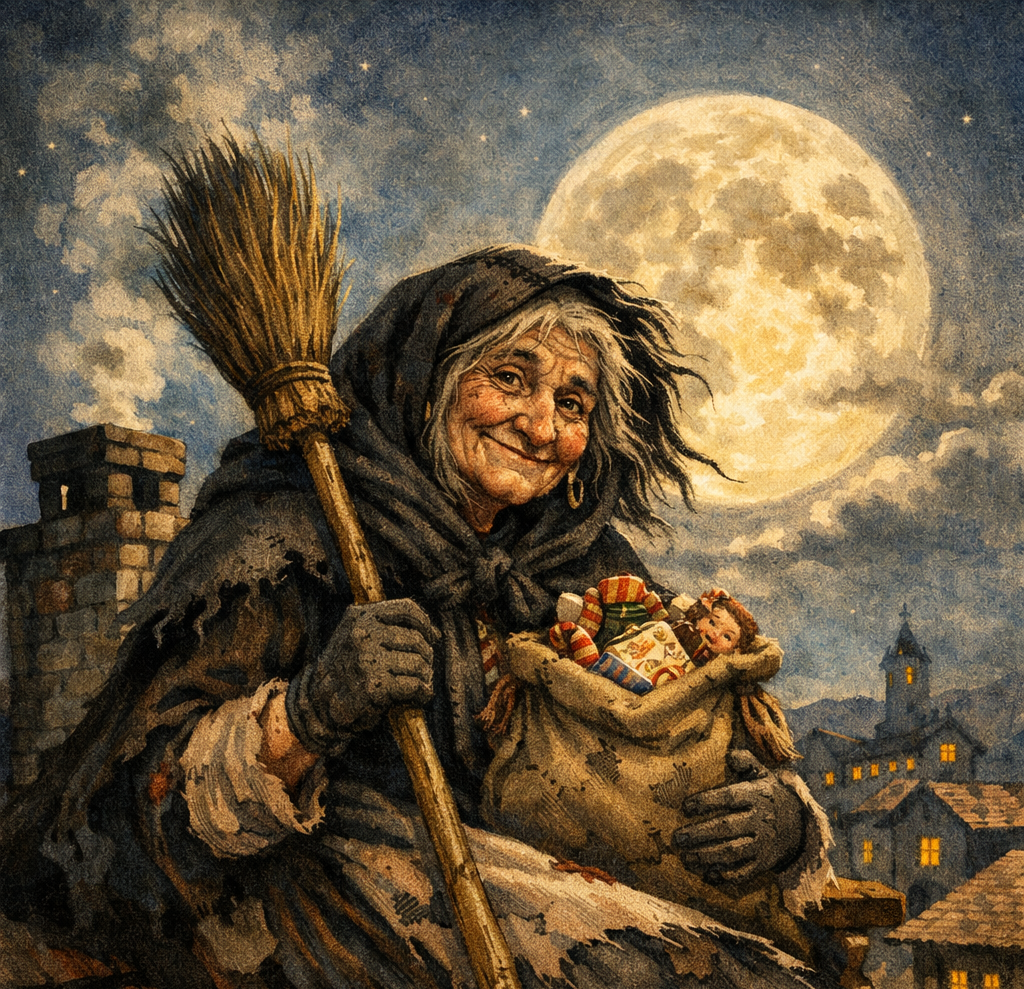
The Befana doesn’t arrive with spectacle. She drifts in quietly—soot-smudged, broom in hand, half-feared and half-loved—slipping through chimneys on the night of January 5 like a memory that refuses to fade. In Italian folklore, she’s the one who brings sweets to good children and coal to the not-so-good ones, though the line between the two has always felt deliberately blurry. She’s no polished holiday mascot. She’s older than that. Rougher around the edges. Honest.
Her origins are famously unresolved, hovering somewhere between pre-Christian rituals, Christian symbolism, and the messy overlap where traditions tend to survive best. Scholars haven’t quite pinned her down—and maybe that’s the point. The Befana isn’t meant to be explained cleanly. She belongs to folklore, not footnotes. To bonfires lit on Epiphany Eve, to effigies burned in small towns, to songs, teasing, and a faint sense of unease children can’t quite name.
She’s often portrayed as a witch—shawl blackened with soot, smile crooked, bag heavy with candy—but that image misses something important. The Befana isn’t evil. She’s tired. She’s endured. She rewards, she corrects, she lingers. Like many figures passed down through generations, she carries contradiction comfortably: feared and mocked, nurturing and unsettling, sacred and slightly ridiculous.
In that way, she feels deeply Italian. A reminder that tradition doesn’t have to be tidy to be meaningful—and that sometimes the stories that stick are the ones that arrive imperfect, a little singed, and still bearing gifts.
In the end, the Befana isn’t just a figure from folklore — she’s a keeper of memory. She lives in the spaces between generations, in stories half-remembered, in traditions that survived not because they were perfect, but because they were repeated. She reminds us that identity is often inherited this way: unevenly, imperfectly, carried forward through ritual, humor, and quiet contradiction. What we remember — and how we choose to retell it — becomes part of who we are. And like the Befana herself, those memories may arrive a little worn, a little smoky, but still carrying something worth keeping.


