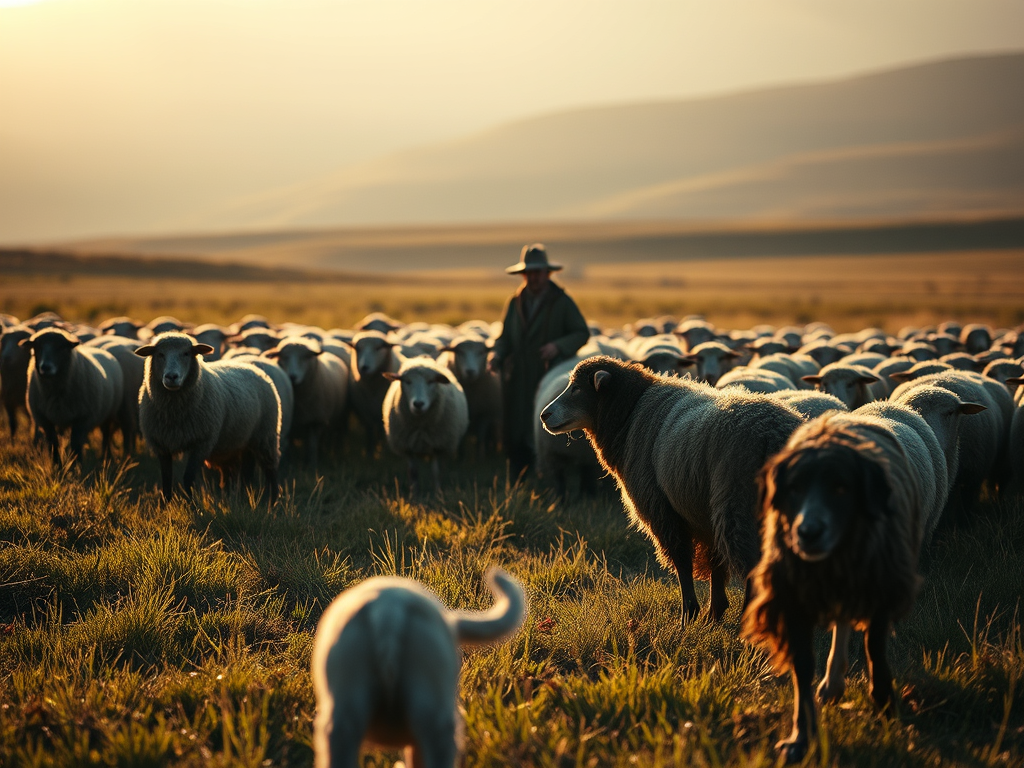
There’s a quiet, stubborn beauty to sheep herding that doesn’t perform for an audience. It just exists.
It’s a conversation without words.
A good shepherd doesn’t command so much as listen. To the sheep, the land, the sky. Movement is subtle—pace, spacing, direction. You guide without force. In a world addicted to control, herding is practiced restraint.
Time slows down—and that’s the point.
Days are shaped by light, weather, and animal needs, not notifications. Sunrise matters. So does silence. You don’t rush a flock any more than you rush a season. The rhythm teaches patience the hard way—and rewards it quietly.
There’s intimacy with the land that few jobs offer.
You learn hills by footfall, not maps. You read clouds like headlines. You know which grass rests the animals and which drains them. It’s not “nature appreciation”—it’s partnership. The land isn’t scenery; it’s a coworker.
Skill replaces spectacle.
Nothing flashy happens when it’s done right. That’s the flex. The beauty is in efficiency that looks effortless but isn’t. In calm sheep. In a dog that understands you with a glance. In problems solved before anyone notices there was one.
It carries memory.
Sheep herding is generational muscle memory—methods passed hand to hand, not slide to slide. When someone herds well, you’re watching centuries of quiet problem-solving still doing its job. That continuity? Rare. Powerful.
And yes—it humbles you.
You don’t dominate animals. You earn their trust. You don’t outsmart weather. You adapt. The work reminds you that humans are part of a system, not the center of it. Honestly? That’s refreshing.
The beauty of sheep herding isn’t romantic fluff.
It’s competence, calm, and connection in a world that rewards noise. Not everyone wants that life. Fair.
But those who do don’t usually leave it unchanged—and that might be the most beautiful part of all.
