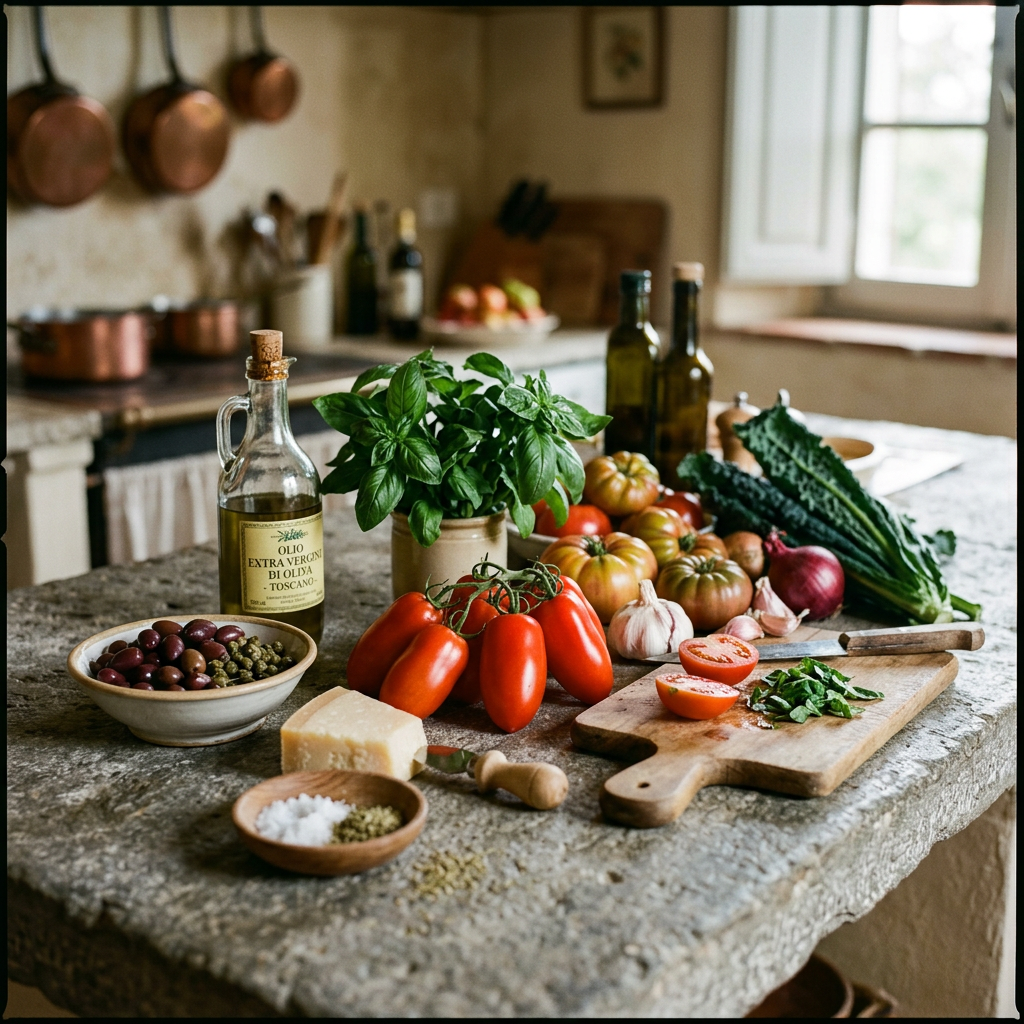
The historic recognition of Italian cuisine by UNESCO underscores a profound truth: food is far more than sustenance—it is a living cultural language, a vehicle for history, and an act of community preservation. This milestone beautifully expands upon the themes we explore at our conceptual “Community Table”, where culinary traditions serve as the emotional and physical glue holding families and heritages together.
This monumental UNESCO designation is about so much more than protected recipes. It is a celebration of the core pillars that keep our communities alive: cultural ecosystems, deep sustainability, and local identity.
The Cultural Ecosystem of Italian Foodways
Rather than archiving static recipes, UNESCO celebrates the dynamic, living relationships fostered through food. This aligns perfectly with the traditional concepts of la famiglia and the intergenerational transmission of culture.
Conviviality and Intergenerational Transmission
The Living Table – The designation highlights the kitchen table not merely as a piece of furniture or a place to consume food, but as a sacred sanctuary for gathering, storytelling, and active cultural continuity. It serves as a daily courtroom of memory, where history is spoken aloud, relationships are repaired, and community boundaries are reinforced through the simple, communal act of breaking bread.
Passing the Torch – Recipes are treated not as rigid, clinical instructions locked in old cookbooks, but as pieces of living history passed down intergenerationally—traditionally anchored by the deep knowledge of elders and matriarchs. Because these foodways are taught through touch, taste, and oral tradition (especially from grandparents to grandchildren), they remain adaptable. Ensuring that as generations migrate or evolve, the core family identity survives, adapts, and resists erasure.
Sustainability and Seasonal Respect
Land Stewardship – Long before modern green initiatives or farm-to-table trends were formalized, traditional Italian foodways relied on a profound, almost sacred respect for seasonal, local ingredients. This stewardship was born out of necessity and a deep listening to the land—knowing exactly when to harvest, how to rotate crops, and how to utilize every single part of an ingredient so that nothing went to waste. It reflects a historical understanding that the health of the community is fundamentally bound to the health of the immediate soil.
Eco-Resilience – Celebrating small-scale farming and organic agriculture practices demonstrates how community-led food cultivation acts as a natural safeguard for the surrounding environment. By rejecting industrial, monoculture food production in favor of localized, biodiverse ecosystems, these traditional practices preserve regional landscapes from being swallowed by globalized corporate farming. It proves that when a community takes ownership of its own food cultivation, it creates a self-sustaining shield that protects both cultural identity and ecological resilience for generations to come.
Biocultural Diversity
Landscape and Identity – There is an unbreakable bond between regional Italian landscapes and the localized gastronomic traditions that define community identities. This connection reflects an intricate geography of flavor, where the specific microclimate of a valley, the salinity of a coastal breeze, or the volcanic minerals in the soil dictate exactly how a community cooks, eats, and gathers. To honor these culinary traditions is to honor the physical terrain itself, proving that local identity is deeply rooted in the very earth beneath a community’s feet.
Defying Homogenization – Just as diaspora communities historically used food to claim physical space and resist cultural erasure in unfamiliar or hostile new environments, this overarching UNESCO recognition serves as a powerful global shield. It actively protects distinct, centuries-old regional foodways from being swallowed by fast-paced, globalized food production and mass corporate commercialization. By declaring these practices a vital piece of human history, it ensures that hyper-local traditions are not watered down into a singular, generic commodity, preserving the rich, diverse tapestry of community storytelling for generations to come.
Italy’s Fabric of Protected Traditions
This comprehensive national designation joins a prestigious list of specific culinary arts and agricultural heritages that Italy has fought to protect over the years:
| Year of Inscription | Food / Agricultural Tradition | Core Cultural Value |
| 2025 | Italian Cuisine | The entire national gastronomic ecosystem, celebrating conviviality, sustainability, and intergenerational storytelling. |
| 2021 | Truffle Hunting and Extraction | Intimate ecological knowledge, oral traditions, and the deep bond between hunters, their dogs, and the forest ecosystem. |
| 2017 | The Art of the Neapolitan “Pizzaiuolo” | Culinary craftsmanship, physical performance, and identity-building passed down through generations of Naples’ pizza makers. |
| 2013 | The Mediterranean Diet | Co-shared with other nations, emphasizing social interaction, biodiversity, and a lifestyle centered around healthy, sustainable food practices. |
The “Community Table” Connection
This global milestone reinforces why culinary preservation is a radical act of love and resistance. Whether it is an Italian matriarch keeping a fragmented heritage alive through a period of crisis, an Indigenous chef reconnecting a community to the land through a Solstice feast, or a queer “chosen family” breaking bread to establish a safe sanctuary—feeding our people is how we ensure our stories endure.

Pull Up a Chair to the Table
True resistance begins with the quiet act of refusing to let our stories be erased. The “Community Table” is infinitely elastic, and there is always an extra seat waiting for you.
We want to hear your voice: How does your heritage, identity, or family history show up when you break bread? What is a recipe or a hidden piece of history you are fighting to pass down?
